
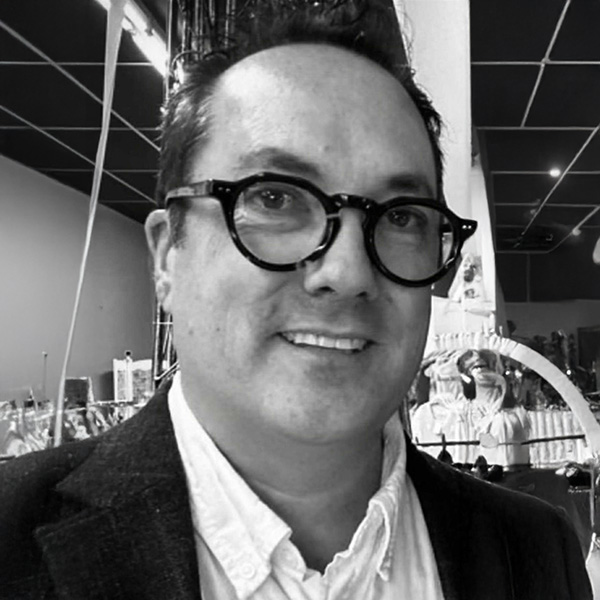
LOYAL. KIND. PERSISTENT.
I grew up in a small resort town on the beautiful shores of Lake Michigan, a community of about 8,000 year-round residents. I’m the youngest of seven children, raised in a Catholic family. I was baptized Catholic, but unlike my six older siblings—who attended Catholic school and mass regularly—my religious upbringing ended there. I always wondered why. Looking back now, I understand.
Growing up in a large family in a small town meant you became known quickly. My parents were also well-known for their generosity and hospitality. Our house was always full—friends dropping by, meals shared with anyone who was hungry, couches offered to anyone in need of a place to stay. Our door was always open. I admired that about my parents and have tried to carry their charitable spirit into my own life.
My parents have been married for 66 years, and today my mom lovingly cares for my dad as he battles terminal cancer. Their bond is unshakable now, though it wasn’t always that way. In the 1970s, my dad struggled with alcohol, and my mom had an affair—with a man who happened to be one of my parents’ closest friends. He had a wife and six children of his own, and our families often spent time together. What I didn’t know then was that he was my biological father.
That truth would remain hidden for 40 years.
The story began to unravel during the Covid pandemic, when my wife and I decided to take Ancestry DNA tests. She suspected she might have a half-sister, and she was right—her DNA connected her to a sister who lived just 30 minutes away. Their reunion was beautiful and life-changing. Watching her joy made me excited for my results.
But when mine came back, my world collapsed. I didn’t see a single O’Brien match. Instead, I saw the name Conley—a name I hadn’t heard in decades. In that moment, I knew: I wasn’t an O’Brien. I was a Conley.
The realization crushed me. I felt betrayed, ashamed, even illegitimate. For weeks, I couldn’t eat or sleep, consumed by how I would tell the man I had always called Dad. Finally, I called him. Through tears, I said, “You’re not my biological father.” After a pause, I heard him say to my mom, “He knows.”
He explained that he had known from the day I came home from the hospital. But he made a decision then: I was his son. He told me I was a blessing, and that he had never looked back. His words comforted me, but the weight of the revelation still lingered.
The next step was even harder—calling my biological father. It felt like betraying the dad who raised me. But my wife reminded me how much she wished she could have met her own biological father, and I finally made the call. When I introduced myself, he stopped me and said, “I’ve been waiting for your call.”
We met soon after, driving across the country to Michigan. Seeing him for the first time was surreal—he looked like me, spoke like me, even had the same spark in his eye. He admitted he always thought my mom would tell me, and that my silence meant I wanted nothing to do with him.
Since then, I’ve built a relationship with him and my Conley siblings, though not everyone has welcomed me. Some relatives preferred to keep me hidden, the “secret” from the past. But others embraced me, and I’ve started to find my place in both families.
I now understand why I wasn’t raised fully in the church, and why my family avoided certain towns where my biological father lived. The truth would have been too obvious.
Though the shock was devastating, I’ve chosen to make the best of this complicated story. I attend graduations, birthdays, and weddings with both sides of my family. I remind myself that the man who raised me is my dad—the one who chose me, taught me, and loved me as his own. I can’t rewrite the past or reclaim lost years with my biological father, but I can embrace the relationships I have today.
Life handed me a difficult truth, but I refuse to drown in sorrow. Instead, I’m building bridges, finding healing, and moving forward with hope